
Why Scale and Proportion Matter in Drapery Hardware Design
Misti St. Pierre on Jan 7th 2026
In interior design, scale and proportion quietly determine whether a space feels intentional or unresolved. While these principles are often discussed in relation to furniture and architectural elements, they are just as critical in window treatments—particularly when it comes to drapery hardware.
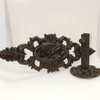
Drapery medallions, holdbacks, and mounting components occupy a unique position in the room. They sit at eye level, frame architectural openings, and interact directly with fabric, wall space, and light. When their size and placement are thoughtfully considered, they reinforce the architecture of the home. When they are not, even the most beautiful fabric can feel visually unsupported.
Understanding Scale in Window Treatments
Scale refers to the size of an object relative to its surroundings. In window treatments, this includes the width and height of the window, ceiling height, wall space, and the weight of the fabric being used. Hardware that is undersized for a large opening can feel weak or decorative rather than structural. Oversized hardware in a small space, on the other hand, can dominate the composition and distract from the window itself.
Drapery medallions offer an advantage in this regard because many designs are available in multiple sizes within the same style. This allows designers to maintain visual consistency throughout a home while adjusting scale to suit each opening. A larger medallion may be appropriate for a wide living room window, while a smaller version of the same design can be used in an adjacent hallway or bedroom without disrupting the overall aesthetic.
Proportion and Visual Balance
Proportion focuses on how elements relate to one another. In window treatments, this includes the relationship between the hardware, the fabric, and the surrounding architectural details. Hardware should feel proportional to the fullness of the drapery, the thickness of the folds, and the vertical space above the window.
Traditional curtain rods create a single horizontal line that establishes proportion automatically, but they can also limit flexibility. Drapery medallions allow for more nuanced proportional decisions. Panels can be mounted higher or lower, spaced closer or farther apart, and layered independently. This freedom makes it possible to tailor the proportions of the treatment to the specific architecture rather than forcing the architecture to accommodate the hardware.
The Role of Material Weight
Material weight plays an important role in how scale is perceived. Iron hardware carries visual and physical weight that helps anchor window treatments, particularly when working with substantial fabrics or tall ceilings. This weight contributes to a sense of permanence and architectural integrity.
Because iron responds to light with subtle texture and depth, it enhances proportion without requiring exaggerated size. A well-scaled iron medallion can provide sufficient presence without appearing oversized, allowing the fabric and window to remain the primary focus.
Consistency Across a Space
One of the challenges in larger projects is maintaining consistency while respecting the unique requirements of each window. Using hardware designs that offer scalable sizing makes it possible to establish a cohesive design language throughout the home.
When scale is handled correctly, hardware becomes part of the architectural rhythm rather than a decorative afterthought. Windows feel related to one another, even when their sizes and functions differ. This consistency supports long-term design flexibility, allowing fabrics to be updated without replacing the underlying hardware.
Designing with Longevity in Mind
Scale and proportion are not just aesthetic concerns—they also affect durability and performance. Hardware that is appropriately sized for the fabric it supports distributes weight more effectively and reduces stress on mounting points. This contributes to long-term stability and minimizes the need for future adjustments.
Thoughtful scaling also ensures that hardware remains relevant as interiors evolve. While fabric trends may change, well-proportioned iron hardware continues to feel appropriate, preserving the architectural integrity of the space.
Final Thoughts
Drapery hardware succeeds when it works in harmony with architecture rather than competing with it. By considering scale, proportion, material weight, and consistency, designers and homeowners can create window treatments that feel intentional, balanced, and enduring.
When hardware is selected with these principles in mind, it quietly supports the room’s design narrative—framing the view, guiding the eye, and reinforcing the structure of the space itself.