

Why Accurate Window Measurements Matter More Than You Think (Before Buying Drapery Medallions)
Misti St. Pierre on Mar 4th 2026
Most homeowners measure their window width and stop there.
But when it comes to drapery medallions, curtain holdbacks, and decorative hardware, width alone is not enough.
Ceiling height, curtain fullness, wall space, and projection depth all affect how your window treatment will look once installed.
That’s exactly why using a proper sizing calculator before purchasing hardware can save time, money, and frustration.
Let’s break down why measurements matter more than most people realize.
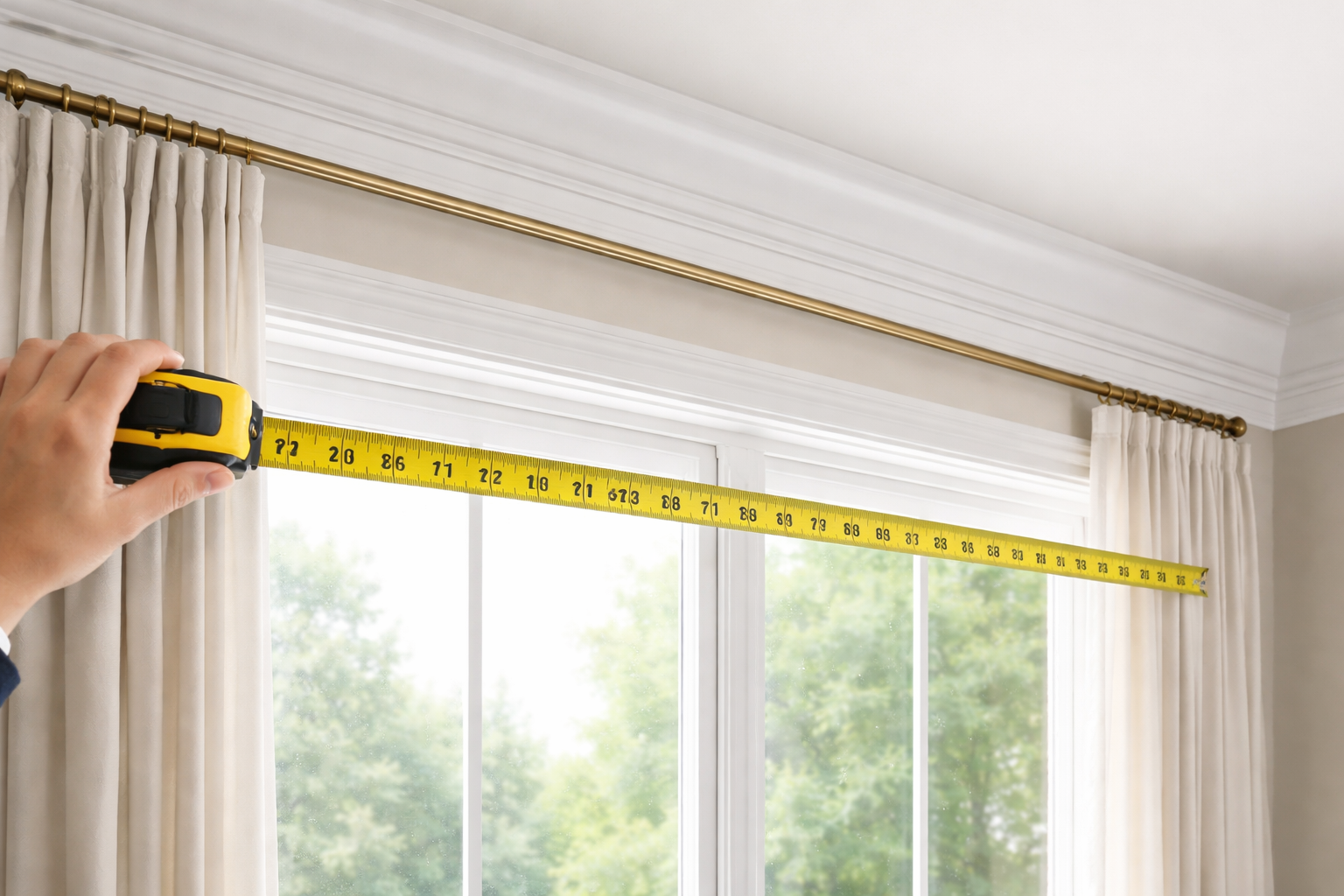
The Biggest Mistake: Measuring Only the Window Frame
When choosing drapery hardware, many people measure:
-
Just the glass
-
Just the trim
-
Or just the frame width
But drapery medallions are not mounted inside the frame.
They sit outside the window and visually frame the entire opening.
If you only measure the window itself, you risk:
-
Buying hardware that is too small
-
Installing too close to the trim
-
Creating an unbalanced look
Proper measurements include wall space beyond the window.
Ceiling Height Changes Everything
Ceiling height directly impacts hardware scale.
For example:
8-Foot Ceilings
-
Smaller to mid-size medallions typically work best
-
Oversized hardware can overwhelm the wall
9–10 Foot Ceilings
-
Medium to large medallions create better proportion
-
Curtains can be mounted higher for added height illusion
12+ Foot Ceilings
-
Larger statement medallions are often necessary
-
Small hardware will visually disappear
Without accounting for ceiling height, hardware selection becomes guesswork.
Curtain Fullness Affects Hardware Size
Curtain panels are rarely flat.
They include folds, pleats, and fullness.
Heavier fabrics like velvet or lined blackout curtains create more volume.
That volume needs visual support.
If the medallion is too small relative to fabric weight, the result looks unstable or undersized.
Knowing:
-
Curtain width
-
Fabric weight
-
Fullness ratio
Helps determine appropriate hardware scale.
Wall Space and Mounting Clearance
Another overlooked measurement is the wall space beside the window.
Drapery medallions require:
-
Clearance from trim
-
Enough side space for curtains to rest
-
Proper vertical placement
If the wall space is too narrow and not measured correctly, installation becomes difficult.
This is why planning before drilling matters.
Why a Calculator Helps
Manually trying to estimate proportions often leads to:
-
Second-guessing
-
Incorrect purchases
-
Extra shipping costs
-
Patch-and-repaint situations
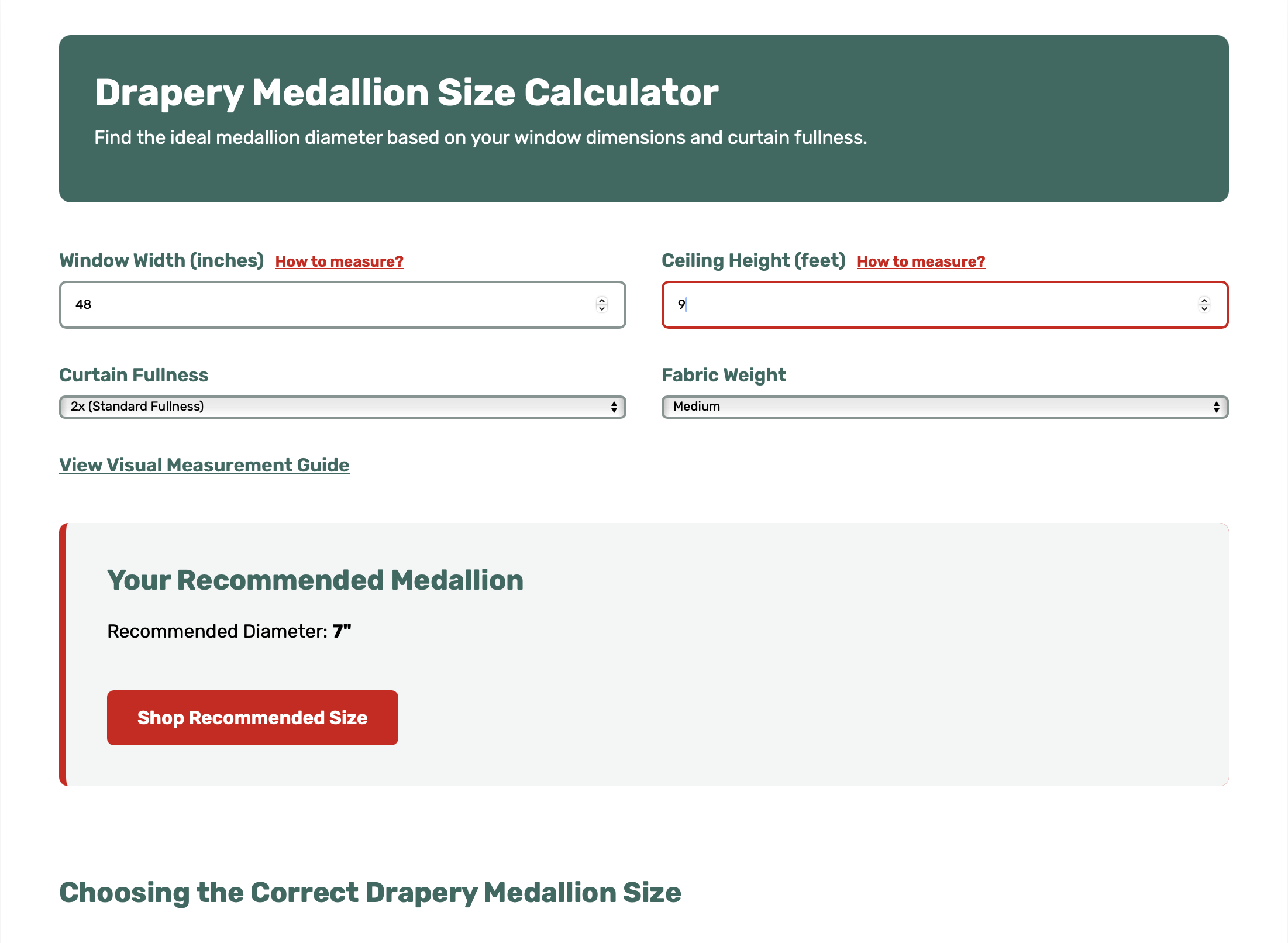
A sizing calculator removes that uncertainty.
It accounts for:
-
Window width
-
Ceiling height
-
Fabric fullness
-
Desired mounting height
Instead of guessing, you make a measured decision.
And measured decisions create balanced interiors.
Visual Balance Is Mathematical
But proportion is mathematical.
When hardware is:
-
Scaled correctly
-
Installed at proper height
-
Spaced appropriately
The window feels intentional.
When measurements are off (even a little), the imbalance is noticeable.
Most people cannot explain why something looks wrong.
They just feel it.
And often, it traces back to measurement errors.
Proper Measurements Save Money
Incorrect sizing can lead to:
-
Reordering hardware
-
Paying return shipping
-
Wall repair
-
Lost time
Taking accurate measurements before purchasing prevents unnecessary costs.
It also ensures your drapery medallions look custom rather than improvised.
Final Thoughts
Drapery medallions are architectural elements.
They frame light.
They support fabric.
They anchor the design of the entire wall.
Because of that, measurements matter.
Window width is only the beginning.
Ceiling height, curtain fullness, and wall clearance all play a role.
When those factors are calculated correctly, the result feels balanced, elevated, and professionally installed.
And that difference is not accidental.
It’s measured.