When Drapery Hardware Becomes a Design Decision
Misti St. Pierre on Jan 8th 2026
Window treatments are often discussed in terms of fabric selection, fullness, and installation technique, yet the role of drapery hardware is frequently underestimated. Hardware is not simply a structural necessity. It is a visible architectural element that influences how a window treatment is perceived, how it interacts with the room, and how successfully it integrates into the overall design.
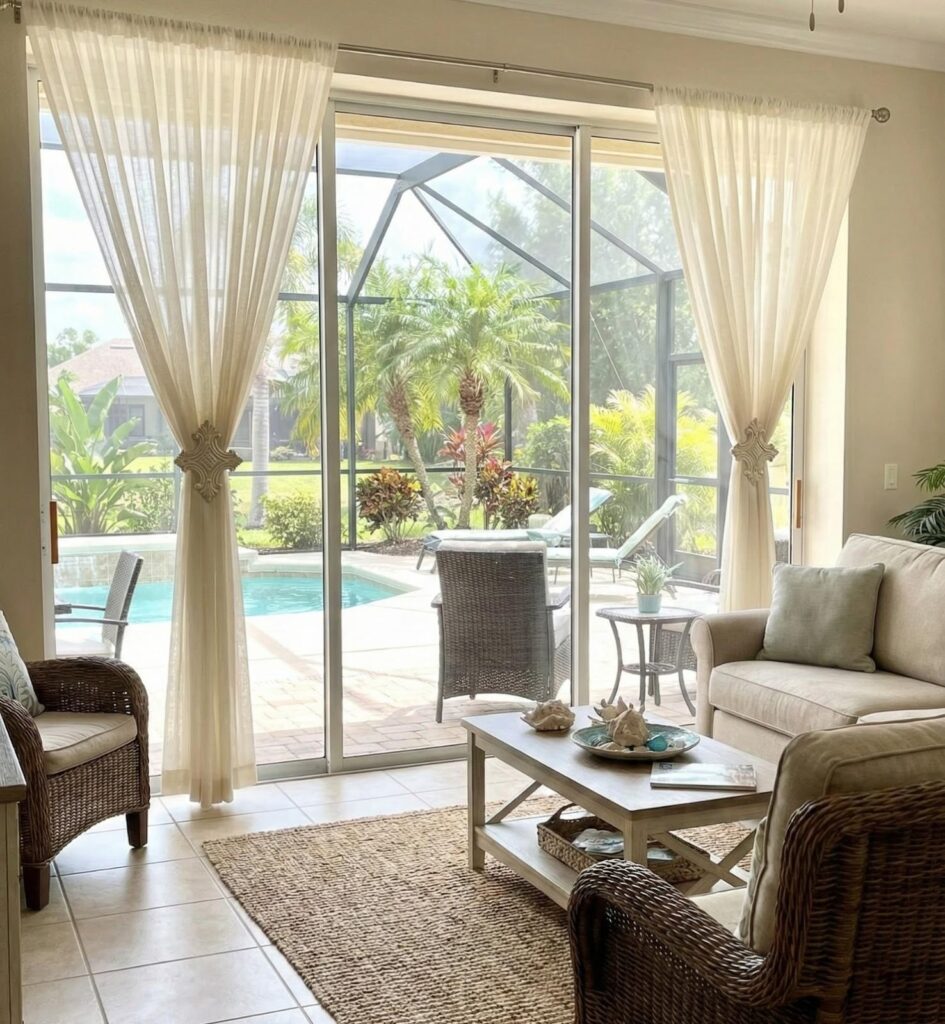
Drapery medallions, rods, and holdbacks sit at eye level and often span the width of a space.
Because of this, their material, scale, and finish have a direct impact on balance and proportion. When selected thoughtfully, drapery hardware enhances the design rather than competing with it.
Understanding how hardware functions beyond basic support allows designers and homeowners to make more informed decisions that lead to cohesive, enduring interiors.
Looking Beyond Style Alone
A common mistake when selecting drapery hardware is focusing solely on style while overlooking construction and sizing. Two medallions may appear similar in photographs, yet differ significantly in material thickness, finish application, and available scale.
Solid iron hardware behaves differently than lightweight cast or composite alternatives. It carries visual weight, holds fabric more confidently, and maintains its presence even when paired with
layered or heavier textiles. This is especially important for installations where medallions are used not only as decorative accents, but as primary mounting points for full window treatments.
Scale plays an equally critical role. Fixed-size hardware often limits design flexibility, forcing
fabric proportions to adapt to the hardware rather than the other way around. Hardware available in multiple sizes allows the window treatment to be scaled appropriately to ceiling height,
window width, and fabric weight, resulting in a more intentional final composition.
Finish as a Coordinating Element
Finish selection is where drapery hardware transitions from functional to expressive. Unlike paint or fabric, finishes interact directly with light, creating subtle highlights and depth that change throughout the day.
Rather than attempting to match finishes exactly, successful interiors rely on coordination. Warm finishes tend to harmonize with natural woods, layered textiles, and traditional architecture.
Cooler finishes often reinforce clean lines, lighter palettes, and contemporary spaces. Darker finishes provide grounding and contrast, especially in rooms with ample natural light.
Hand-applied faux finishes introduce variation that machine-applied coatings cannot replicate. Slight shifts in tone and texture prevent hardware from appearing flat or overly uniform, allowing it to integrate naturally into a room with other handcrafted or organic materials.
Function Shapes Design Possibilities
One of the most overlooked aspects of drapery hardware is how its intended function influences the overall design. Medallions and holdbacks are traditionally associated with pulling fabric aside, yet they can also serve as primary installation points for entire window treatments.
Using medallions instead of continuous rods opens up creative possibilities. Panels can be spaced to create soft swags, tailored folds, or layered compositions without the visual interruption of a long horizontal bar. This approach is particularly effective for bay windows, arched openings, and spaces where traditional rods would feel bulky or restrictive.
When hardware is designed with both decorative and structural performance in mind, it becomes a design tool rather than a limitation.
Evaluating Value in Decorative Hardware
Price comparisons in decorative hardware can be misleading when viewed without context. Similar-looking products may vary widely in cost due to differences in size availability, finish structure, and production scale.
Hardware offered in a single fixed size often carries a higher price regardless of application, while scalable designs allow cost to align more closely with actual material use. Likewise,
finishes that are treated as premium upgrades can significantly inflate pricing without necessarily improving durability or performance.
Understanding how pricing structures relate to size, finish, and construction allows designers and homeowners to evaluate value rather than price alone. A transparent overview of how these
differences appear across the market can be found here:

Designing for Longevity
Well-chosen drapery hardware is not replaced frequently. It must withstand daily use, environmental conditions, and evolving interior updates. Iron hardware finished properly tends to age gracefully, developing character rather than showing wear.
This longevity is particularly important in custom installations where consistency matters over time. Hardware that maintains its finish integrity and structural reliability supports long-term design investments and reduces the need for replacement when fabrics or furnishings change.
Final Thoughts
Drapery hardware deserves the same level of consideration as fabric, trim, and architectural detail. When material, finish, scale, and function are evaluated together, hardware becomes an integral part of the design rather than an afterthought.
Thoughtful selection leads to window treatments that feel intentional, balanced, and durable.
Whether the goal is subtle support or architectural emphasis, informed hardware choices contribute to interiors that perform well visually and functionally for years to come.
Metropolis Iron
At Metropolis Iron, drapery hardware is approached as a permanent design element rather than a decorative afterthought. Our focus is on handcrafted iron medallions and hardware that balance durability, thoughtful scale, and finish integrity, allowing designers and homeowners to create
window treatments that feel intentional and enduring.
By offering solid iron construction, hand-applied finishes, and scalable sizing, our goal is to support custom design without unnecessary complexity or inflated pricing. The result is
hardware that integrates seamlessly into a wide range of architectural styles while maintaining consistency, reliability, and long-term value.