

The Designer’s Dilemma: Achieving Architectural Precision with Drapery Medallions
Misti St. Pierre on Jan 5th 2026
In the world of high-end interior design, the most successful spaces are often defined by what is absent as much as what is present. While the curtain rod has long been the default solution for window treatments, it can occasionally introduce an unwanted "industrial" feel or a heavy horizontal line that interrupts the vertical flow of a room. For designers and homeowners seeking to transcend the standard, the transition from rods to medallions is not merely a stylistic preference—it is a strategic move toward architectural precision and creative liberation.
The Freedom of Placement and Form
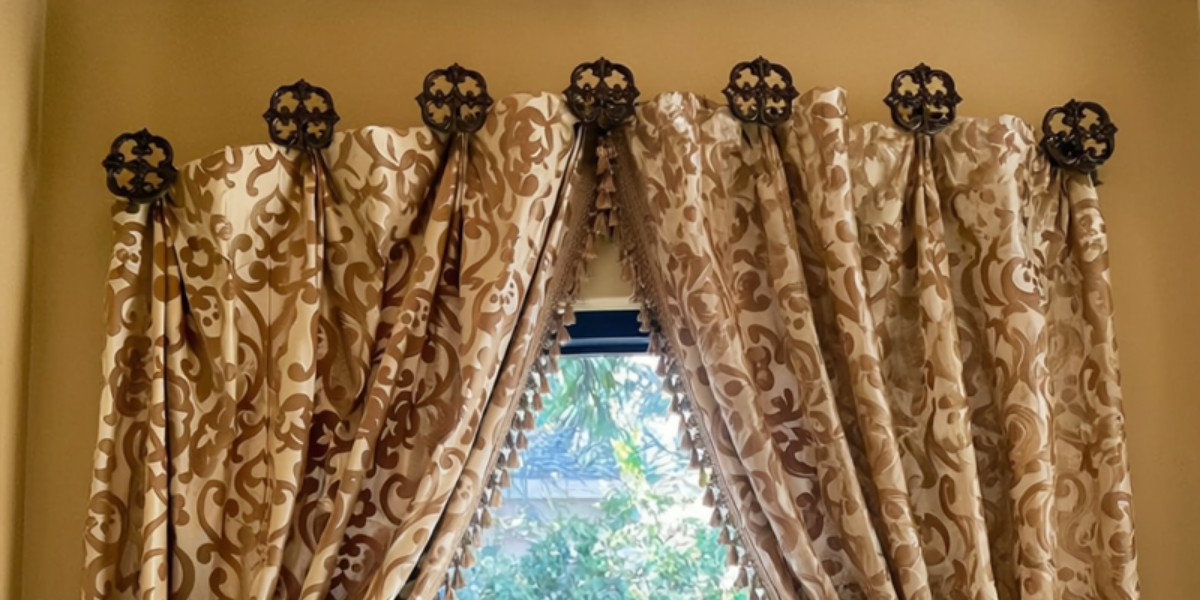
The most compelling argument for medallions is their unparalleled placement flexibility. A rod, by its very nature, imposes a rigid, continuous line that demands the architecture conform to it. In contrast, medallions allow the fabric to be mounted at discrete, intentional points. This is particularly transformative in homes with complex silhouettes, such as bay windows, corner glass, or walls with frequent directional shifts.
By utilizing a "point-to-point" system, the treatment can follow the home’s actual architecture with bespoke tailoring. Instead of a rod cutting across a beautiful arched window or a tight corner, medallions allow the fabric to frame the opening naturally, highlighting the craftsmanship of the window itself.
Depth, Dimension, and the Art of Layering
In formal environments—such as a grand dining room or a primary suite—layering is often essential to achieving a sense of luxury. However, when multiple layers of fabric are forced onto a single or double rod system, the hardware can become visually "choked," losing the definition of the individual textiles.
Medallions solve this by allowing each layer of fabric to be supported independently. This creates a sculptural depth and "breathing room" at the top of the treatment, ensuring the window looks curated rather than cluttered. When exploring the full range of drapery medallion designs, designers can select profiles that specifically enhance the "fall" of the fabric, allowing for deep, luxurious folds that a flat rod might otherwise compress.
Engineering Beauty: The Technical Advantage
From a structural perspective, medallions offer a distinct advantage in weight distribution that is often overlooked. For expansive windows or heavy, high-interlined fabrics like velvet or silk, a long rod can create significant tension on a few concentrated mounting points, often leading to "sagging" in the center over time.
Because medallions distribute the weight across multiple individual anchors, they provide a more stable and reliable support system for substantial treatments. This direct-load mounting reduces the physical stress on the wall and eliminates the need for unsightly center support brackets that often break the visual line of a traditional rod.
Scaling the Narrative
Scale and proportion are the silent drivers of a room's success. Large-scale windows demand hardware with enough visual "gravity" to anchor the design, yet finding a rod that is both long enough and appropriately weighted can be a logistical challenge.
Because medallions are available in graduated sizes within the same design family, it becomes possible to maintain a consistent aesthetic language across an entire project while scaling the hardware to fit the specific needs of each opening. A grand window in the great room can feature a 4-inch medallion, while a smaller window in an adjacent nook uses a 2-inch version of the same design—creating a cohesive, professional narrative throughout the home.
The "Jewelry" of the Room
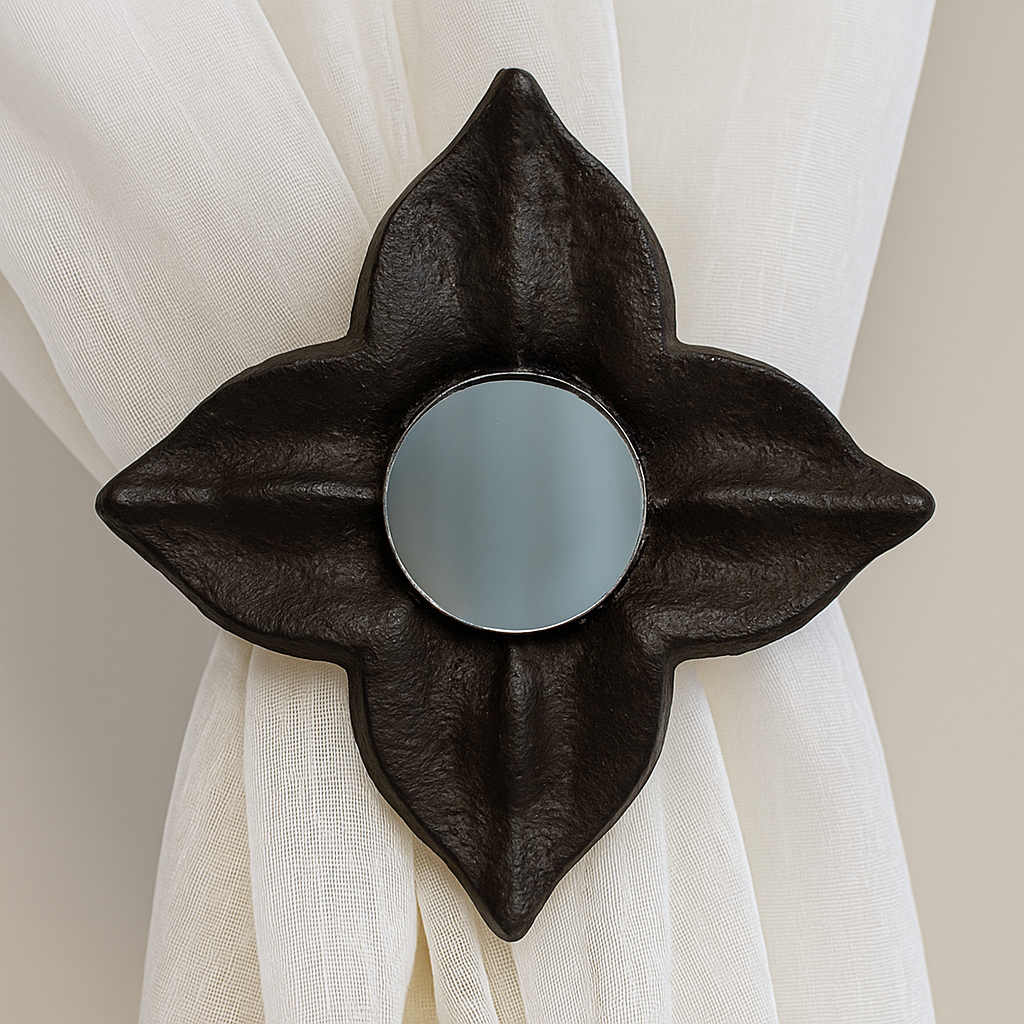
Beyond their structural utility, medallions allow for a heightened level of stylistic expression. In spaces where the hardware is intended to serve as a focal point, mirrored and decorative statement medallions act as the "jewelry" of the room. They offer a unique opportunity to echo other motifs in the space—such as the curve of a bespoke chandelier, the texture of a fireplace surround, or the metallic accents on fine cabinetry. This level of detail transforms a functional necessity into an artisanal statement.
A Strategic Investment in Flexibility
From a practical standpoint, medallions simplify the evolution of a space. Because the fabric is not constrained to a fixed horizontal bar, panels can be repositioned, re-swagged, or re-styled as the room’s function changes over time. This adaptability is invaluable for seasonal updates or for homeowners who enjoy refreshing their interiors without a complete overhaul of the hardware.
For those in the curation phase of a custom project, the tactile experience of selecting the right scale and finish is essential. To ensure the hardware aligns perfectly with the interior vision, requesting a printed drapery hardware catalog is a vital step in the planning process, allowing for a side-by-side comparison of finishes against fabric swatches and paint samples.
Ultimately, choosing medallions over traditional rods is an investment in the architectural integrity of the home. By removing the constraints of the horizontal bar, you allow the window treatment to become a truly integrated part of the interior landscape.
About Metropolis Iron
Metropolis Iron is a premier manufacturer of handcrafted iron drapery medallions, designed to provide a sophisticated alternative to traditional curtain rods. Based in Florida and serving the high-end design trade, their products focus on architectural flexibility, scale consistency, and artisanal finish quality for the world’s most refined custom window treatments.
This article is as seen on: https://eristart.com/the-designers-dilemma-achieving-architectural-precision-with-drapery-medallions.html