

How Drapery Hardware Shapes the Way a Room Feels
Misti St. Pierre on Jan 12th 2026
When people evaluate a room, they often respond emotionally before they can articulate why a space feels balanced, calm, dramatic, or unfinished. While furniture placement and color palettes are obvious contributors, one of the quieter influences is drapery hardware. The way curtains are supported, framed, and presented has a direct impact on how a room is perceived, even when the hardware itself is not consciously noticed.
Drapery hardware sits at a unique intersection of structure and decoration. It defines the boundary between wall and window, supports fabric movement, and reinforces architectural intent. When selected thoughtfully, it contributes to a sense of cohesion and permanence that elevates the entire space.
Hardware as a Visual Frame
Windows function much like artwork within a room. They create focal points, control light, and influence how the eye moves through a space. Drapery hardware acts as the frame around that artwork.
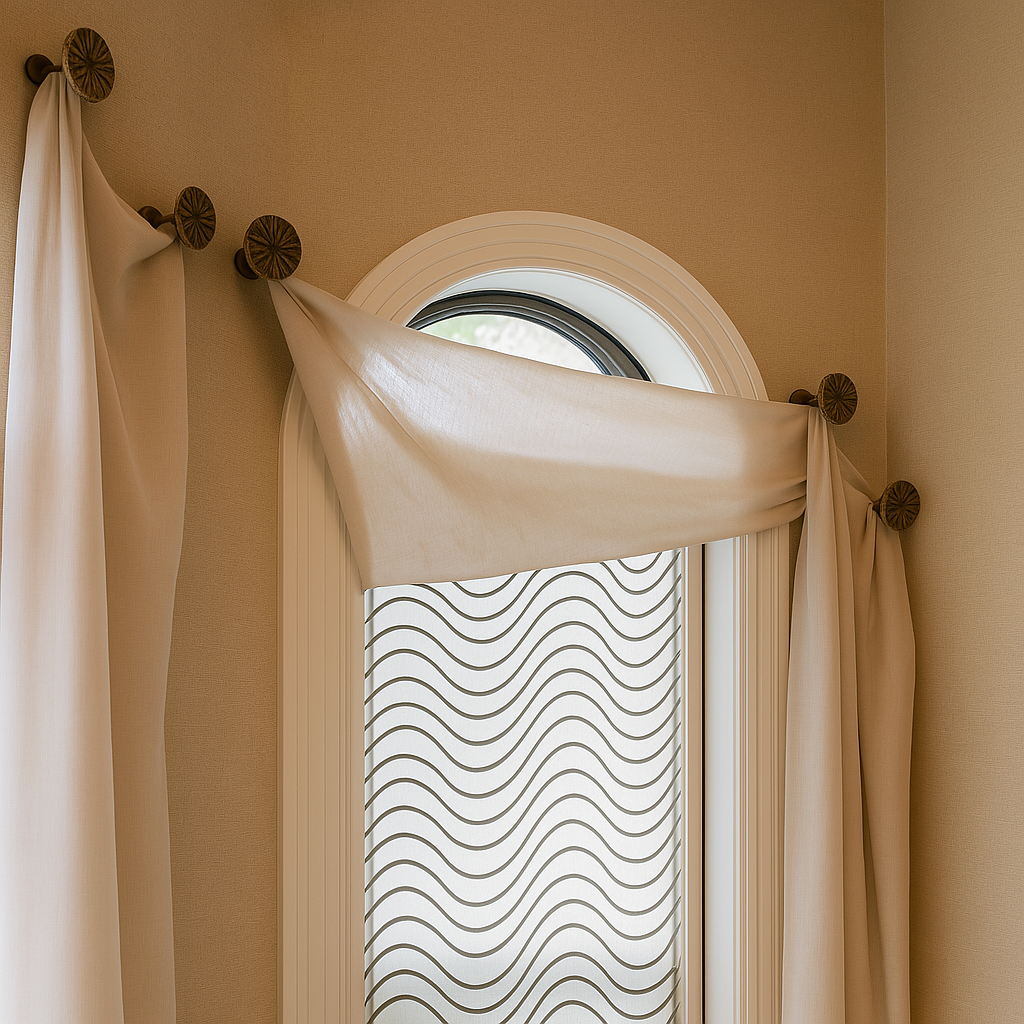
Continuous curtain rods establish a strong horizontal line, which can either ground a room or interrupt vertical flow depending on ceiling height and window placement. Drapery medallions and holdbacks, by contrast, create a series of intentional points rather than a single dominating line. This allows fabric to follow the architecture more naturally, especially in spaces with tall ceilings, irregular layouts, or expansive glass.
The Psychological Impact of Material
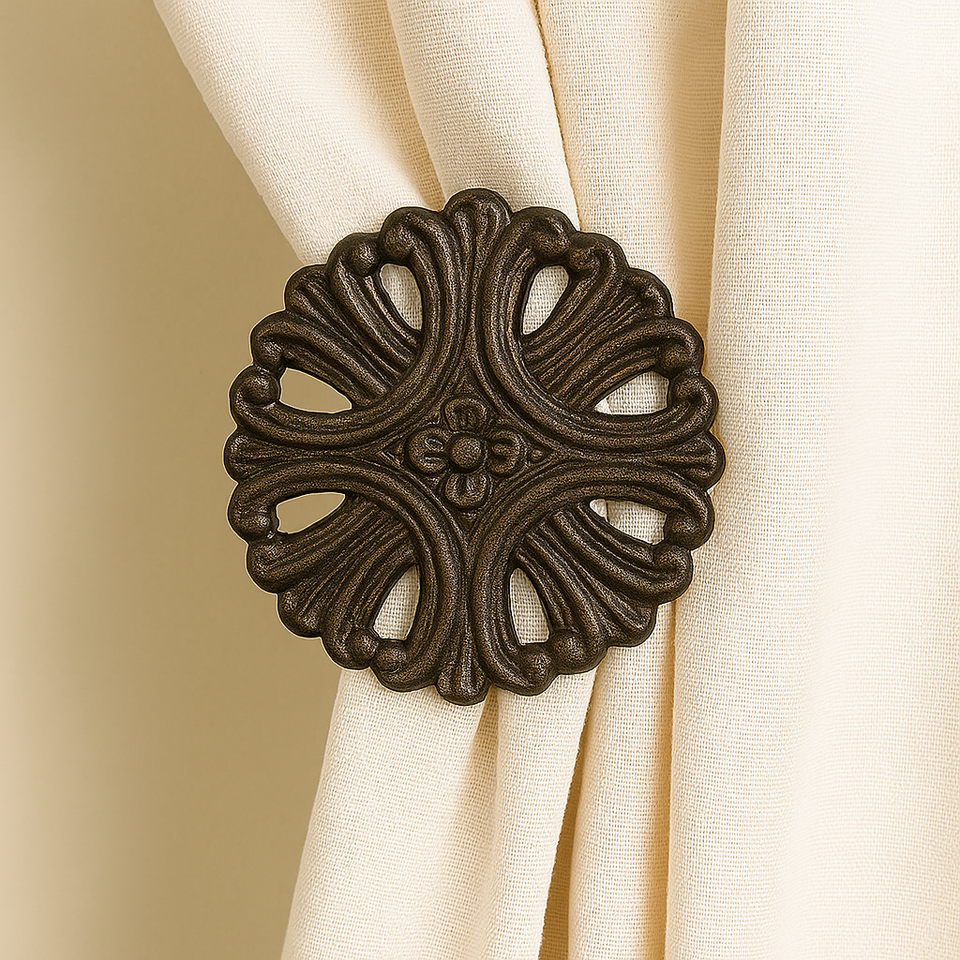
Material choice affects how a room feels on a subconscious level. Iron hardware introduces visual weight and stability, which helps anchor soft elements like linen, silk, or sheer panels. This balance between softness and structure creates a sense of intentional design rather than decoration added as an afterthought.
Lightweight or hollow hardware may visually disappear, but it can also make window treatments feel temporary or unsupported. Solid iron, especially when finished with hand-applied techniques, provides a tactile presence that reinforces the architecture of the space.
This is particularly important in rooms where the windows dominate the wall surface. In those cases, the hardware becomes part of the room’s structural rhythm rather than a secondary accessory.
Finish and Light Interaction
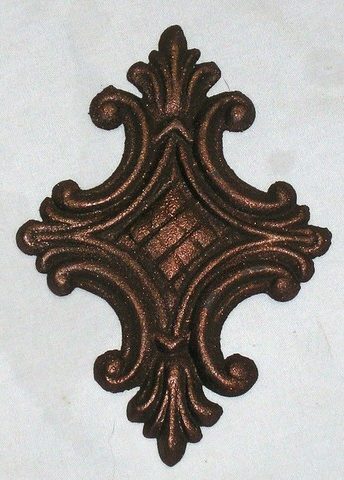
Finish selection plays a critical role in how drapery hardware interacts with light. Unlike flat painted surfaces, hand-applied faux finishes reflect light unevenly, creating subtle highlights and depth that change throughout the day.
In bright rooms, lighter finishes help maintain openness without introducing glare. In moodier spaces, darker finishes provide contrast and grounding without overwhelming the design. The key is coordination rather than exact matching. Hardware finishes should relate to surrounding materials such as wood, stone, plaster, or metal accents without competing for attention.
Function Influences Perception
How hardware functions also affects how a room feels. Medallions used as primary mounting points allow for fabric to be arranged in swags, layered panels, or sculptural compositions that feel deliberate and architectural. This approach removes the visual heaviness of a long horizontal rod and introduces more flexibility in how the window treatment is styled.
In spaces such as bay windows, corner glass, or arched openings, this flexibility is especially valuable. Rather than forcing the architecture to adapt to standard hardware, the hardware adapts to the architecture.
This freedom often results in window treatments that feel calmer and more integrated, even when the design itself is visually expressive.
Longevity and Emotional Consistency
Drapery hardware is rarely replaced once installed. While fabrics may change with seasons or trends, the hardware typically remains in place for years. For this reason, it plays an important role in maintaining emotional consistency within a home.
Well-scaled iron hardware ages gracefully. Minor wear and patina often enhance its character rather than detract from it. This sense of continuity supports interiors that evolve over time without feeling disjointed.
Final Thoughts
Drapery hardware quietly shapes how a room is experienced. Through material, scale, finish, and function, it influences balance, light, and architectural clarity. When chosen with intention, hardware supports the emotional tone of a space rather than competing with it.
By viewing drapery hardware as part of the architectural framework instead of a purely decorative element, designers and homeowners can create window treatments that feel grounded, cohesive, and enduring.
About Metropolis Iron
Metropolis Iron specializes in handcrafted iron drapery medallions and decorative hardware designed to integrate seamlessly into architectural interiors. With a focus on material integrity, hand-applied finishes, and scalable design, Metropolis Iron approaches hardware as a lasting design element that supports both creative expression and long-term performance.