
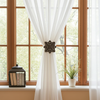
Choosing the Right Drapery Hardware Finish for Your Space
Misti St. Pierre on Dec 16th 2025
When selecting drapery hardware, style and function often take center stage, but finish choice plays an equally important role in the final design. The finish of your curtain rods, medallions, and finials affects not only how the hardware looks on its own, but how it interacts with the surrounding architecture, fabrics, lighting, and other metal elements in the room. Understanding how to choose the right finish can make the difference between a window treatment that feels cohesive and one that feels disconnected.
One of the first factors to consider is the overall design style of the space. Traditional interiors often benefit from finishes with depth and character, such as oil rubbed bronze, antique iron, or hand applied patinas. These finishes tend to soften the hardware visually and complement detailed moldings, layered textiles, and classic furnishings. In contrast, contemporary interiors typically favor cleaner finishes like matte black, dark steel, or smooth iron tones that emphasize form and structure without drawing excessive attention.
Lighting conditions also influence how a finish will appear once installed. Natural light can highlight texture, revealing subtle variations in hand finished iron that may not be visible in a showroom or product photo. In darker rooms or spaces with limited daylight, finishes with slight highlights or warm undertones can prevent the hardware from disappearing into the background. Conversely, in bright rooms with large windows, darker finishes often create a grounding effect that frames the drapery and defines the window opening.
Another important consideration is how the drapery hardware finish relates to other metals in the room. While exact matching is no longer a strict rule in interior design, finishes should still feel intentional. Mixing metals works best when there is a clear hierarchy. For example, drapery hardware can serve as the dominant metal element, while lighting fixtures, cabinet hardware, or furniture accents play a supporting role. Repeating similar undertones—warm with warm, cool with cool—helps maintain visual harmony even when finishes differ.
Fabric choice should also influence finish selection. Heavy, richly colored drapery fabrics often pair well with darker iron finishes that provide contrast and visual weight. Lighter fabrics such as linen, cotton, or sheers may benefit from finishes that are softer or more neutral, allowing the fabric to remain the focal point. The goal is balance. The hardware should enhance the drapery, not overpower it.
Finish durability is another practical factor, particularly in regions with high humidity or coastal environments. Certain finishes are better suited to withstand environmental conditions without fading or degrading over time. Hand applied finishes with protective coatings can offer added longevity while still maintaining the character and texture associated with real iron. This makes them especially appropriate for long term installations where consistency and appearance matter.
Scale and finish work together to define the overall impact of the hardware. A larger diameter rod or oversized medallion will naturally draw more attention, making finish choice even more critical. In these cases, finishes with depth and subtle variation often perform better than flat or overly glossy surfaces. They help soften the visual mass of the hardware while preserving its architectural presence.
It is also worth considering how finishes age. Unlike mass produced coatings that may chip or peel, properly finished iron develops character over time. Minor variations and wear often enhance the material rather than detract from it. This natural evolution is part of what makes iron hardware appealing in both classic and modern interiors. The finish becomes part of the story of the space rather than something that needs constant replacement.
Ultimately, choosing the right drapery hardware finish requires looking at the room as a whole. Architecture, lighting, fabric, surrounding materials, and long term use all play a role in determining which finish will feel most appropriate. When these elements are considered together, the hardware becomes a seamless extension of the design rather than an afterthought.
Well chosen finishes contribute to the longevity, function, and visual balance of window treatments. Whether the goal is subtle support or architectural emphasis, thoughtful finish selection ensures that drapery hardware enhances the space for years to come.